

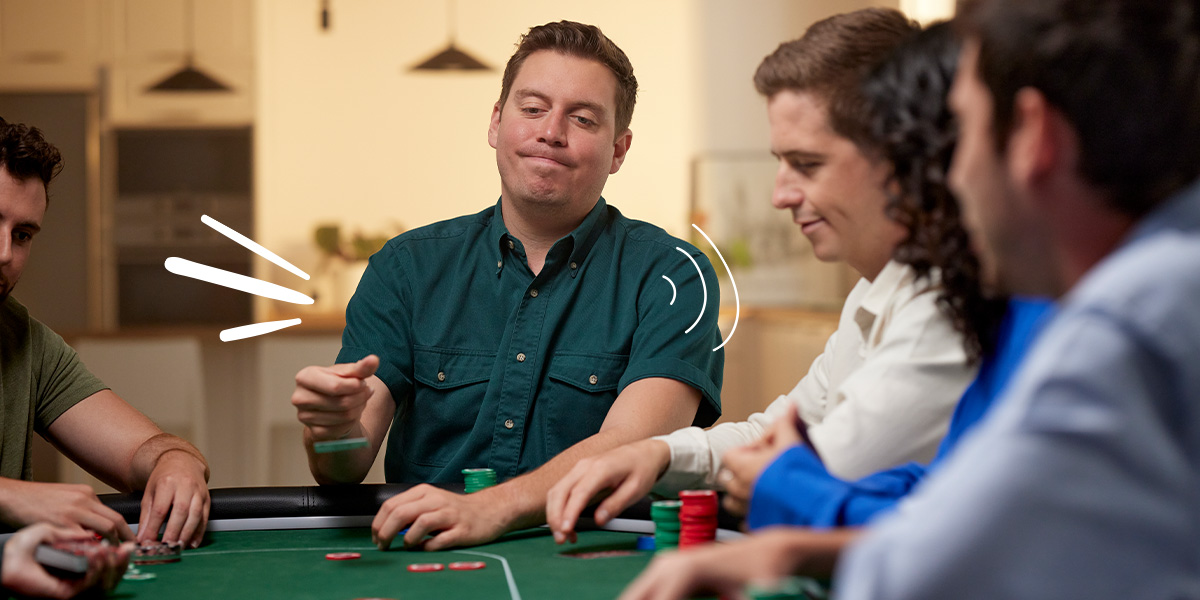
Humans, in the face of uncertainty, do not have a single feeling, but rather a cocktail of emotions that can combine fear with excitement and sometimes even frighten the most insightful among us. Imagine taking a step to make a decision that might succeed and be a big hit, might fail and be a monumental flop, or even clicking that spin button in an online game.
The Two-Sided Uncertainty: Fear and Excitement.
The traditional emotional reaction to uncertainty is fear. It warns against possible danger, sharpens, and prepares our bodies to act–occasionally to fight, sometimes to run. In its turn, excitement manifests itself when there is a possibility of a reward, novelty, or challenge.
What Happens in the Brain
The simultaneous activation of the two systems is equivalent to what occurs in our brains when we have two high-intensity signals, the danger and reward signals, running simultaneously. This interaction is why the uncertain reward situations can be so rewarding, to the point where they can be addictive. The adrenaline (created by fear) and dopamine (created by excitement) are joined in a cycle of highs. It is known among behavioral economists as the dopamine loop and can have an insidious effect on decision-making, risk assessment, and participation in cyberspace.
Cognitive biases often magnify these effects. The fear of losing something is more significant than the feeling of gaining something, e.g., loss aversion, which is why a risky decision may be both anxious and thrilling. There is also decision fatigue: the less we use our mental resources, the weaker our ability to rationally evaluate fear against excitement becomes, and thus the more prominent the thrill of uncertainty becomes.
Fear and Excitement Outside of the Lab.
Such tendencies are not limited to neuroscience laboratories; they are manifested in real life. Fear and excitement are combined in adventure sports, speaking in front of an audience, gambling in one’s career, and even walking into new social situations. The impact is increased in the digital world—unpredictable rewards, real-time feedback, and design that fosters immersion result in uncertainty packaged as amusement.
An example of this is online gaming. On sites such as Play at Azur Casino, users receive micro-doses of uncertainty and reward repeatedly. One spin, bet, or challenge triggers the arousal overlap we mentioned: the heart leaps, the brain anticipates winning, but the fear of losing is always there. This behavior stimulates play, as gamers seek the rush and the uncertainty. This design reflects the belief in the gratification of instant rewards and in rewards that are not predefined, but rather change with shifts in behavior, without any direct pressure.
These same principles are involved even in non-gambling-like situations. Notifications on social media, app challenges, and systems of digital achievement all leverage the conflict between FOMO and the desire for what could be gained. This emotional dynamic may provide answers to questions such as why individuals find repeated digital experiences enjoyable, why some risks can be too tempting to resist, and why some designs are magnetic beyond any logical explanation.
Expert Perspectives
According to behavioral economists, one of the fundamental forces behind the risk-emotion interaction is the coexistence of fear and excitement. By researching these emotionally ambivalent conditions, specialists will better understand trends in decision-making, online activity, and financial behavior. The slight thread of fear and excitement does not merely exist as a quirk in the human brain — it is a prism through which we can perceive how people navigate ambiguity in a world structured to keep them constantly on their feet.
On a platform such as Azur Casino Italy, e.g., the moderate uncertainty, reward potential, and instant response provide a micro-world for human decision-making under uncertainty. It is not merely a matter of fun, but it is an example of how behavior, emotions, and cognition interact in real time. The players do not simply experience games; they are a sophisticated interplay of cognitive bias, dopamine loops, and arousal.
